1. Planting preparation:
Prepare containers for planting orchids, and take some rotten leaf soil or topsoil (soft soil) from the mountain. The neutral acid soil with a large amount of humus, loose and good drainage is better, and the pH value is generally about 5.5 to 6.5.
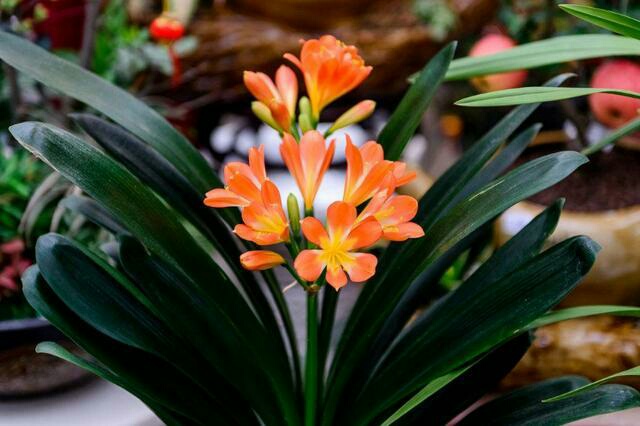
2. Planting and planting:
The orchid plants to be planted will be planted in the center of the basin, and fixed with props and cords when appropriate, so as to avoid damaging the roots. Slightly compress the plant from both sides.
3. Location:
Place orchids on south facing balconies or courtyards (not north facing balconies or long-term indoor use). In spring and winter, let it bask in more sunshine. In summer and autumn, when people feel uncomfortable in the sun, they don't let the orchids directly under the sun. No fertilization.
4. Timely watering:
If the orchid is not watered on time, you can remove the plant material on the basin surface two or three centimeters deep. If it is dry, water it immediately; if it is not dry, pour it in a day or two. When pouring, pour the whole basin thoroughly and pour it for a while, so that all the plant materials can "eat" water.
5. Weather proof and freezing damage:
"February ghost wind" old leaves yellow back is a normal phenomenon, can cut off the withered branches and leaves. Orchid can be drenched with light rain, but avoid mildew rain, rainstorm or continuous rain, otherwise easy to rot heart, rotten leaves. In rainy season, a small amount of plant ash can be sprinkled appropriately. When the temperature is about 3 ℃ in winter in North China, orchids should be moved indoors to avoid freezing injury; in the south of Fujian, orchids can survive safely outdoors in winter.
6. Pruning and picking flowers:
In the process of cultivation, the leaves of orchids should be cut off. To facilitate ventilation. If there are too many flower buds, only strong buds should be left. 1-2 flower buds are suitable for each pot. Spring orchids should be removed after half a month of flowering, and rare orchids should be removed in 7 days. The spring leaf buds grow vigorously and become better in the coming year. When the last flower on the inflorescence of xialan blooms for a week, it is cut 3 cm away from the basin surface.
7. Prevention and treatment of diseases and insects:
Basin soil should be generally sterilized (sun exposure can also be), in order to prevent the occurrence of disease. In rainy and high-temperature seasons, orchids are most likely to suffer from white silk disease. A small amount of orchids can be wiped off with a wet cloth, and most pots can be sprayed with 500-800 times Bordeaux solution or tobutzin every 7-10 days. During hatching, 1% Omethoate and 25% imiphos EC were sprayed once a week. In order to cure the symptoms, it is necessary to treat the root cause. The pots should be placed in a proper density and height, and ventilation should be increased to reduce the occurrence of diseases.
Tips: compared with other flower varieties, orchids are more difficult to grow because their roots are more sensitive to water and are easy to be "drowned" or "thirsty". Therefore, more care should be taken in the selection and matching of plant materials. The drainage performance must be good, and watering should not be too frequent. In short, controlling the water content of orchid plants is the key to success or failure of orchid cultivation.