A thick layer of scale will grow on the inner wall of the kettle after being used for a long time. Generally, scale is mainly produced by the action of "hard water". We call the water containing calcium, magnesium salts and other minerals as "hard water". Rivers, lakes, wells and springs are hard water. Tap water, which is obtained after filtration, is also hard water.
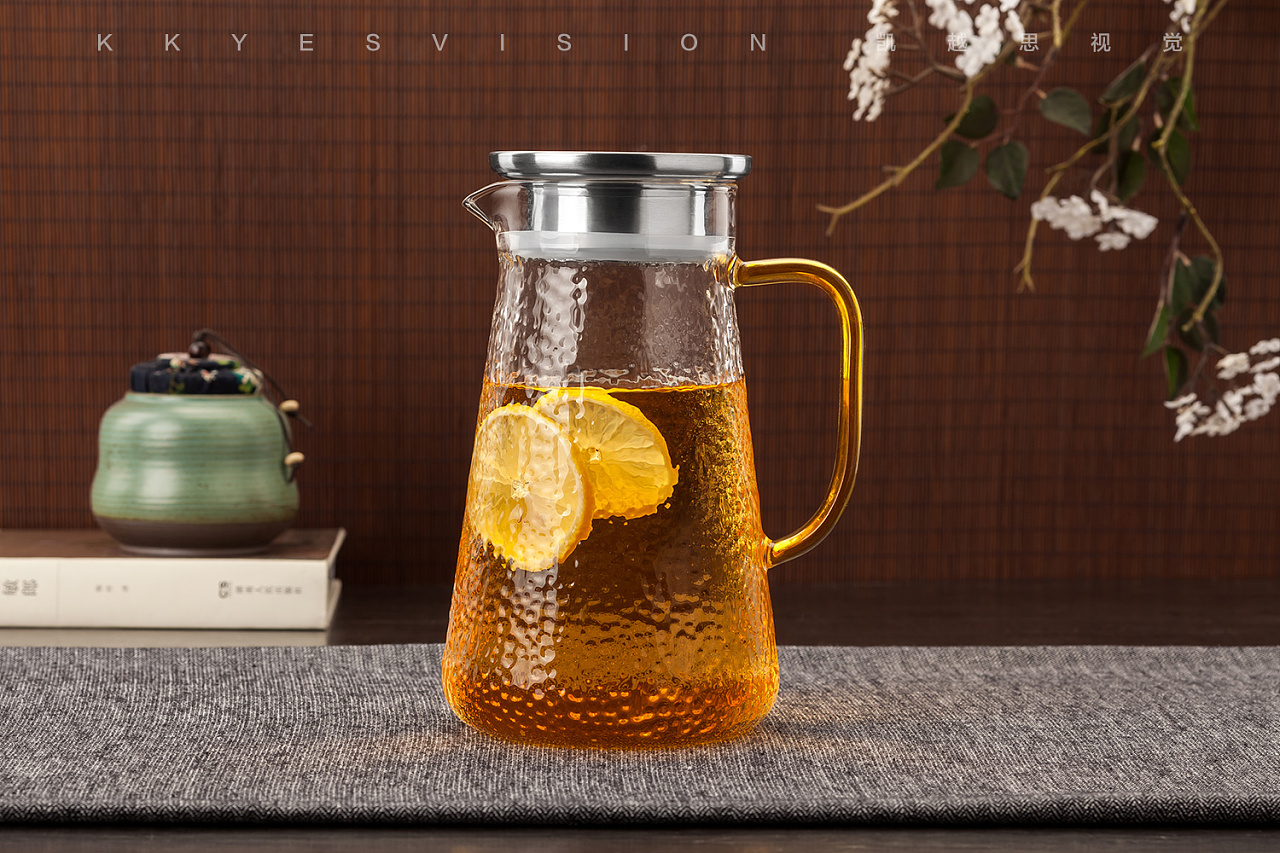
After boiling, some of the original water will evaporate. The original dissolved calcium bicarbonate and magnesium bicarbonate decompose in boiling water and give off carbon dioxide, and then become insoluble calcium carbonate and magnesium carbonate (which are the main components of limestone and dolomite) and precipitate. This is the origin of scale. Let's learn about it.
The harm of scale
Scale is very harmful to human body. Many people think that scale only affects the beauty; once the boiled water settles, the scale will not affect the taste; the scale in the thermos bottle can't be seen anyway, and it will not have any impact. Originally, scale is the sediment of heavy metals, calcium salts, dust, pathogenic bacteria, insect eggs and corpses mixed in the water, which is not only unhygienic, but also seriously affects people's health. According to chemical analysis, there are a large number of heavy metals in the scale. It has been proved that scale can not only cause a variety of stone diseases, but also cause diseases of digestive, nervous, urinary, hematopoietic, circulatory and other systems, causing aging. Long term intake can cause heavy metal poisoning, and many heavy metals can cause canceration of human organs.
Scaling affects human health. Dental scaling and periodontitis are often caused by scaling, which can cause death. Legionella, which still has no vaccine to prevent, hides in the scale, causing 2000 to 3000 deaths a year in France. There are more hidden dangers in scale. If you wash your face and take a bath with water containing scale, calcium magnesium soap will be formed. It is sticky like gum and sticks to the face and skin, making it difficult to remove the dirt. If the dirt is not cleaned, it will block the opening of skin gland, form embolism, affect normal metabolism, and cause premature atrophy and aging of skin.
How to produce scale
It's mainly about water quality. If the water quality is hard, the oxygen content in water is insufficient and the water molecules are unstable, the solubility of calcium and magnesium ions in water will be reduced, and the precipitation will be intensified, thus forming scale. As long as the water temperature exceeds 60 ℃, especially in the north where the water quality is relatively hard, there will certainly be scale, and there will be scale in the daily kettle and boiler. The solution is to clean it regularly.
How to remove scale?
1. Scale removal with sodium bicarbonate
When boiling water in an aluminum kettle, place a teaspoon of baking soda and boil for a few minutes. The scale will be removed.
2. Scale removal with vinegar
If the kettle has water alkali, you can put a few spoons of vinegar in the water. After boiling, the water and alkali can be removed.
3. Anti scaling of mask
Put a clean mask in the kettle. When boiling water, the scale will be absorbed by the mask.
4. Removing scale from eggs
The pot of boiling water is hard and hard to remove after being used for a long time. In this regard, it can be used to cook eggs twice, will have an ideal effect.
5. Removing scale from potato skin
Aluminum pot or pot after a period of time, there will be a thin layer of scale. Put potato skin inside, add appropriate amount of water to boil, boil for about 10 minutes to remove.
6. Scale removal by thermal expansion and cold contraction
Put the empty kettle on the stove to dry the water in the scale. When you see cracks at the bottom of the pot or there is a "bang" sound at the bottom of the pot, take down the pot and quickly inject cold water, or wrap the handle and spout with a rag and hold it in both hands, and quickly sit the dried kettle in cold water (do not let water into the pot). The above two methods need to be repeated 2-3 times, and the scale at the bottom of the pot falls off due to heat expansion and condensation.
7. Scale prevention of boiled yam in kettle
Put more than half a pot of yam in a new kettle, fill it with water, and cook it. If you boil water later, there will be no water and scale. Don't scrub the inner wall of the kettle after boiling the yam, otherwise it will lose the anti scaling effect. For the old kettle with scale, after boiling the yam for 1-2 times with the above method, not only the original scale will gradually fall off, but also the water scale can be prevented.
8. A magnet in the kettle can remove scale
Put a magnet in the kettle. When boiling water, the thick scale on the bottom of the pot will crack by itself, so it is easy to take out the scale block.
Prevention of scale
Ion exchange method
Ion exchange resin can be divided into two categories. One is used to reduce the hardness of water to soft water for cleaning and bathing. This kind of ion exchange resin is called sodium ion exchange resin. The second type is hydrogen ion exchange resin used to reduce the hardness of water to prevent scale formation after boiling drinking water.
1. Cleaning, bathing, etc.: sodium ion resin reacts with calcium and magnesium ions in water, quickly exchanges sodium ions into water and adsorbs calcium and magnesium ions in water, thus softening hard water thoroughly and turning it into water without calcium and magnesium ions. It is suitable for washing clothes and bathing. The product using this kind of resin is water softener or water softener.
2. Drinking: hydrogen ion exchange resin reacts with part of calcium and magnesium ions in water, which can reduce the hardness appropriately, and keep the appropriate amount of calcium and magnesium ions in water, and at the same time, it can make no residual scale in the boiling water. Products using this kind of resin, such as special water purification equipment for infants and young children, baby love water filter pot for infants, etc.
Physical filtration
A membrane separation process in which fresh water is extracted from a water body with a pressure higher than the osmotic pressure as the driving force and the selective permeability of a selective membrane that can only penetrate water but not solute. Reverse osmosis is also called reverse osmosis. It is commonly known as pure water machine.
Chemical treatment
A chemical agent that can prevent scale formation or inhibit its deposition and growth. Such as silicon phosphorus crystal, three sodium soft agent (sodium hydroxide, sodium phosphate, sodium humate). It can be selected according to different usage.