Although the temperature is relatively low now, there are still many friends who can't resist their desire to grow flowers. When they are free, they want to go to the flower market and go around for a few rounds to see if there is a suitable one. If you buy them and move them home, you may see the flowers bloom in winter! If you think it's time to buy a few pots of flowers and plants to raise them, there are three recommended flowers for you. You should know that they can blossom in winter, and the flowering time can be as long as 100 days.
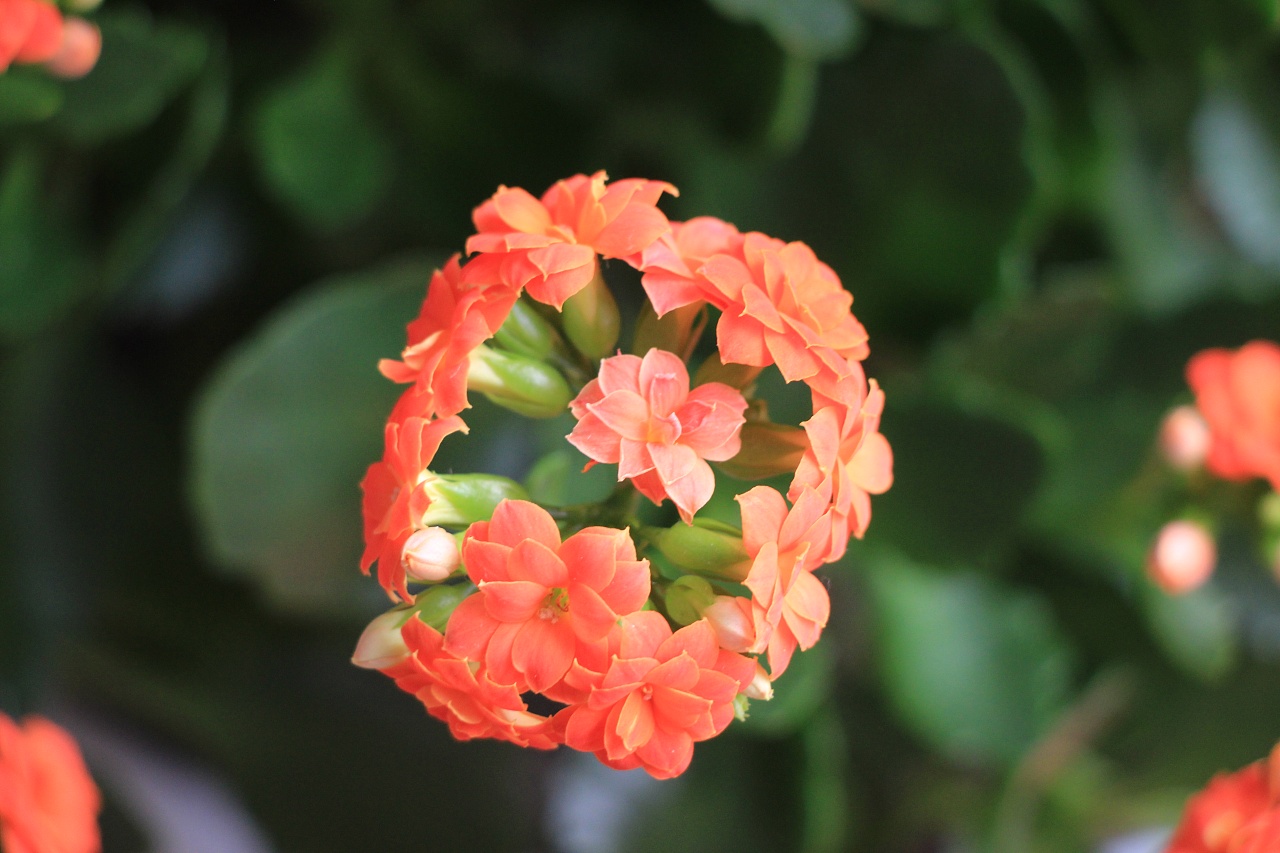
1. Longevity flower
Speaking of the flowers that can stick to their posts in winter, longevity flowers should be counted as one. The flowering time of longevity flower is just like its name, and the number of flowers is large, and the color is also various, which can meet the needs of different people for home decoration effect.
Maintenance method of longevity flower:
1. The suitable temperature for its growth is no more than 30 ℃ in the daytime and no less than 18 ℃ in the evening. If the temperature is too high or too low, it will affect its normal growth. Longevity flower is drought resistant, watering is finished before noon, and leaves must be kept dry before nightfall.
2. Longevity flowers like sunshine, family training should be placed in a place with direct sunlight throughout the year. However, the sun should be properly shaded around noon in summer and can be moved indoors, otherwise the light is too strong to make the leaves yellow. On the contrary, if the light is not enough, not only the branches are thin and slender, the leaf surface is thin and the plant shape is not beautiful, but also the number of flowers decreases, the flower color is not bright, and will cause a large number of leaves to fall off and lose the ornamental value. Moreover, as a short day plant, longevity flower is more sensitive to photoperiod. When the plants with good growth and development were treated with short day (8-9 hours per day) for 3-4 weeks, the flower buds would bloom. Longevity flower has phototropism, so we should pay attention to change the direction of flowerpots and adjust the light during the growth, so that the plant receives light evenly, and the branches grow evenly around.
3. It is suitable for the soil with good drainage, and the peat plus vermiculite and perlite artificial culture soil is the best. The pH value of the culture soil was 5, 8 ~ 6 and 2.
2. Crab claw orchid
The crab claw orchid is very common in the family flower, its leaf is very characteristic, is assumes the zigzag shape, is like a small crab claw. When the flower bud opens, the whole branch is covered. The scene is really beautiful. Moreover, the crab claw orchid is easy to grow in winter and can easily spend the cold winter!
Maintenance method of crab claw orchid:
Crab claw orchid is easy to cause rotten roots due to excessive watering or poor drainage. Therefore, it is best to plant in soil mixed with peat and rotten leaves with clean and loose coarse sand.
Excessive fertilization and too high concentration of fertilizer can easily cause rotten roots, wilting of stem nodes and falling off of flowers when half opened. The principle of fertilization is less application and more application.
In summer, many people think that plants and flowers need to drink more water, so they will be watered too much. In fact, when the light is very strong in summer, the crab claw orchid enters a semi dormant state, and the watering frequency is reduced compared with that in spring and autumn. It is absolutely necessary to avoid water in the flower pot, otherwise the root system will rot.
When the summer sun is scorching, the best shade is 50%. Move the crab claw orchid to a shady and sunny place. Indoor light can meet the normal growth of crab claw orchid. The best shade is 50%.
Spring and autumn slightly warm, to see the pot soil dry quickly before watering. The principle of watering is "between dry and wet, dry to thoroughly dry, not dry do not water, water thoroughly.". In winter and spring, the temperature drops and the weather is colder. Generally, water is poured once every 7-10 days.
When the sun is bad or the weather is cold, move the crab claw orchid to the balcony and other places with good light. And every one or two months, to move to outdoor maintenance for 10 days and a half months, otherwise the leaves will not grow full, yellow.
The optimum temperature for the growth of crab claw is 18 to 23 ℃. The best temperature for flowering is about 15 ℃, which should not exceed 25 ℃ and lower than 10 ℃.
In autumn, the crab claw orchid enters the flowering period. In order to avoid damaging the flower bud due to the large temperature difference between day and night, the crab claw orchid should be moved to the place with better indoor light, and the flower shape should be trimmed, and the weak flower buds that are too dense should be cut off.
Due to the purification of tap water at home, long-term use of watering flowers will have a bad impact on the growth of flowers, therefore, it is recommended that you purchase a small amount of ferrous sulfate, the blending ratio is roughly water: ferrous sulfate = 300:3, fully dissolved before watering flowers. Every 6 months.
In the cultivation of crab claw orchid, sometimes four to five new branches grow from the top of a node. In order to maintain ventilation and photosynthesis, one or two branches should be cut off.
When the scale insects were seriously damaged, the damaged parts of leaves would be yellow white. It can be scraped off with bamboo chips or sprayed with pesticides.
When the crab claw grows to a large size, it is necessary to insert a bamboo pole into the soil. The upper part of the scaffolds is tied into two or three layers of circular supports. The knots are tied on the ring, so that the branches and leaves of the crab claw can be easily fixed.
3. Clivia
Clivia is a kind of plant that people love and hate, love its green leaves and bright flowers, and hate why it is so hard to raise. The flowering period of Clivia is also concentrated in winter. Many flower friends are taking good care of it from now on, just to see the scene of Clivia blossom at the end of this year.
Methods of Clivia maintenance:
Soil: Clivia's native place is under the big trees in the high altitude forest of Southern Africa, and the root system is rooted in the layer of rotten leaves accumulated for many years. The cultivation soil can be made up of 65% humus soil, 20% net sand and 15% fine furnace ash. The relative humidity of soil should be about 40%. If the soil hardens, drainage is not smooth, it will lead to rotten roots. Spring soil, the best purchase of Clivia special soil planting. The special soil for Clivia is rotten leaf soil, which is very suitable for the growth of Clivia.
Fertilization: the Clivia to winter to apply solid fertilizer, less nitrogen, more phosphorus, potassium fertilizer. Eggshell powder and fermented fishy water are good phosphate fertilizer, while chaff ash and soot are easy to get potash fertilizer. It can also be applied with N, P, K compound fertilizer to promote the germination of more new plants and leaves. Fertilization must be appropriate, do not apply thick fertilizer and raw fertilizer without fermentation, otherwise, it is easy to cause leaf tip scorch or rot. In winter, if the new leaves appear spots and the root system turns yellow, it means excessive fertilization, while the new leaves are narrow, thin and light in color, which is the performance of fertilizer deficiency.
Watering: the soil should not be too dry or too wet. Every time you water the soil, you must pour it thoroughly, and you should pour more water after budding. Every 20 days or so, the combination of watering and fertilization can be combined by applying fermented bean cake water, light fishy water and horseshoe water once every 20 days. When the room temperature is low, the watering should be controlled to prevent the basin soil from being too wet, which will cause the rotten root death of the plant, but also can not make the basin soil too dry.
Heat preservation: the suitable temperature for Clivia growth in winter is 15-20 ℃, preferably not lower than 10 ℃. The temperature should be kept at about 18 ℃ after channeling, and the temperature difference between day and night should be about 10 ℃. Otherwise, the arrow will blossom if it does not grow to the appropriate height, which is easy to form "clip arrow". When the outdoor temperature is lower than 10 ℃ at night, the Clivia should be moved into the room. When the indoor temperature is lower than 10 ℃, in addition to covering the surface of pot soil with a layer of 1 cm thick charcoal powder for heat preservation, the flowerpot should be placed in the indoor sunny warm place. When the indoor temperature is particularly low, the film can be covered on the flowerpot to raise the temperature, but the temperature inside the cover should not exceed 25 ℃. If it exceeds, ventilation and cooling should be carried out in time.
Light: Clivia is easy to blossom in short sunshine. Sun exposure, summer sun direct note to get sunburn, inhibit growth. From May to September every year, it should be cultivated in shade shed or semi shade environment without direct sunlight. But the longer the duration of sunshine in winter, the better. Weak light can prolong flowering period. It likes warm and cool, avoid severe cold and heat, generally grow well in the temperature of 18-20 ℃, and stop growing below 5 ℃. After Clivia entered the room, the light was limited, so it was necessary to move the flowerpot manually. Under normal circumstances, the flowerpot should be placed indoors in the sunny place during the day, so that the sunlight can reach the plants. Before flowering, the flowerpot should be placed under the fluorescent lamp at night to supplement the light. As the two rows of leaves of Clivia are opposite, if the light is in the same position for a long time, the growth of leaves will be uneven and the ornamental effect will be affected. Therefore, we should pay attention to the direction of the leaves when adjusting the light, and change the sunny surface every 10 days or so. There are two ways to arrange flowerpots indoors: one is to make the leaves parallel to the sunny window, the other is to make the leaves perpendicular to the sunny window, and the latter is better than the former.
Extended flowering period: the flowering period of Clivia is mostly from December to march of the following year. The method of prolonging the flowering period is to place the flower in a dark place when it is about to open, properly control watering and keep the temperature at 8-12 ℃. In this way, the flowering period can be prolonged by 10-20 days.