According to media reports, a woman's birthday, a restaurant to eat. She likes taro by nature, so she ordered a plate of taro with scallion oil. She tasted the taro and chewed it in her mouth. She felt that it was not right and vomited. But a few minutes later, she developed sore throat and numb lips. The family felt that there was something wrong with this dish of taro with scallion oil. They sealed it immediately and sent the lady to the hospital for treatment.
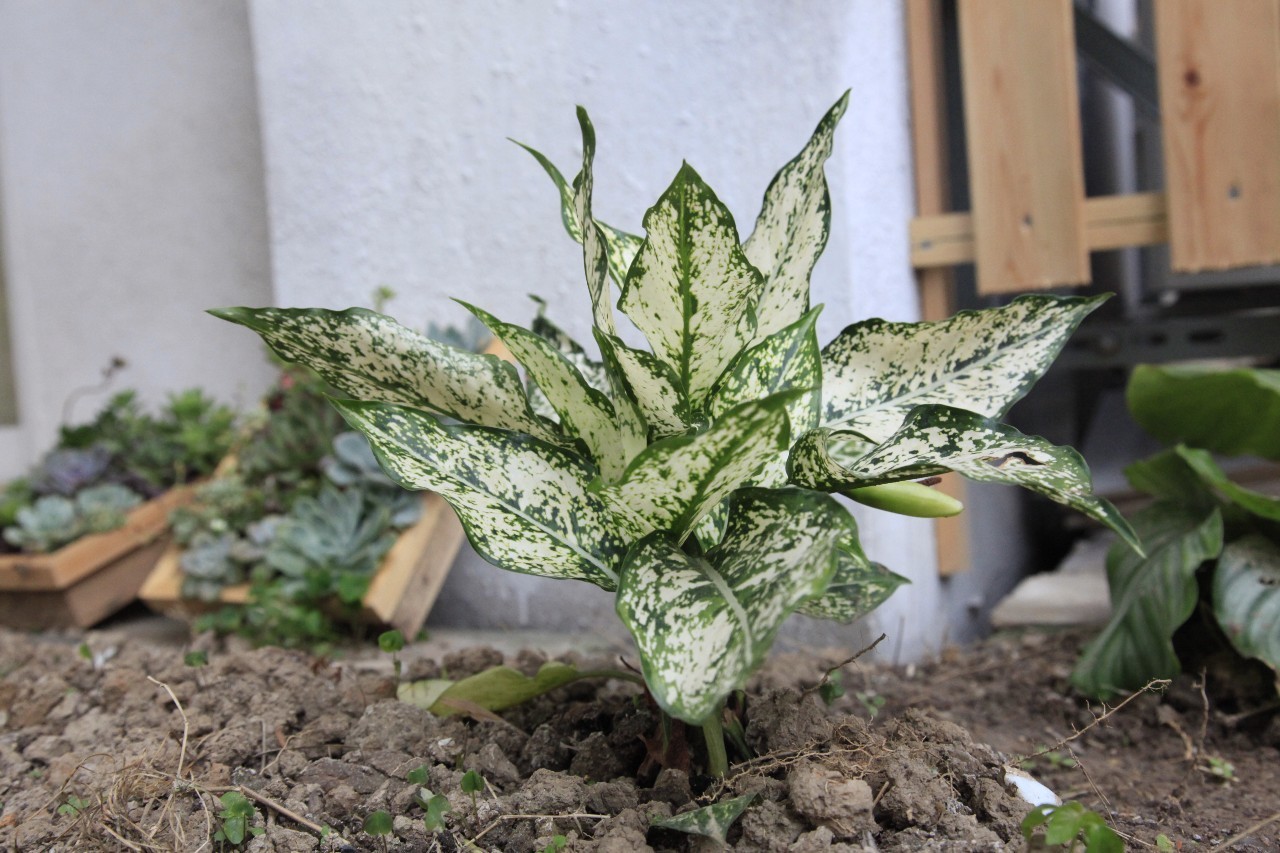
Taro, a perennial herb of Araceae and rich in starch, is a favorite vegetable in southern China. It is said that the Emperor Qianlong was willing to eat Lipu Taro when he arrived in Guangxi. How can taro be poisonous? After testing, this dish of "onion oil taro" is not taro at all, it is a kind of poisonous plant called Alocasia esculenta. Alocasia esculenta, native to South America, is named after its resemblance to taro. It has ovate leaves and long and fat petioles. However, different from taro, the whole plant contains toxins, which can cause sore throat, swollen tongue and even heart paralysis.
It is worth noting that although the taro is so dangerous, it is kept at home by many people as an ornamental flower. There is also a rather elegant name, "dripping Guanyin". Many people may be surprised to hear that "dripping Guanyin" is poisonous. In fact, there are many legends about poisonous flowers and even carcinogenic plants on the Internet.
What do you know about carcinogenic plants?
The Internet is still hyping some carcinogenic plants. In fact, it is not news any more. A few years ago, the media and the Internet had spread such news: it was found that more than 50 kinds of plants can cause cancer, and attached a list of plants. As soon as the news came out, flower lovers were terrified and many plants were cleared. In addition, the news that "oleander can cause cancer" spread out, causing a lot of panic. Shanghai and other places cut down a large area of oleander planted as street trees, resulting in great losses. Several years later, these news still appear in the tabloids and microblogs from time to time, and are often mentioned.
According to agricultural experts, it is true that plants cause cancer. The Institute of Virology, Chinese Academy of preventive medicine has studied the carcinogenic effect of the substances contained in plants. From 1693 kinds of Chinese herbal medicines and plants, 52 kinds of plants containing cancer promoting substances were detected from 18 families. These 52 kinds of carcinogenic plants include: Lithospermum, alternifolia , Ficus tenuifolia, Ficus altissima, Croton hirsutum, croton mucronatum, Croton, kylin crown, cat's eye grass, Zeqi, kansui, xusuizi, alpine snow, Begonia, qiangencao, hongbeiguihua, jiweimu, Jatropha curcas, hongque coral, Sapium Sapium sebiferum, Sapium rotundifolia, tung oil tree, tung oil tree, fire disaster, genkwa, Jiexiang, Stellera chamaejasme, yellow genkwa Aquilaria sinensis, Daphne genkwa, sappan, Lysimachia kwangtungensis, Euphorbia macrophylla, Eupatorium macrophylla, Eupatorium pseudoforsythiae, Belamcanda Belamcanda, iris alba, Clematis flavescens, Clematis virgata, Datura stramonium, three shuttle, Impatiens balsamifera, Scirpus chinensis, Actinidia broad-leaved, Hainan Lou, bitter almond, Achyranthes bidentata.
If you take a closer look at the list, you can see that neither the oleander nor the dripping Guanyin is included. Why? Although dripping water Guanyin is toxic, no one has confirmed that it contains carcinogens. But "oleander causes cancer" is actually unjust false wrong case.
Do these plants really cause cancer?
Experts believe that it is not accurate to say that these listed plants cause cancer, and its biggest effect is that it may awaken cancer cells and promote cancer onset. It's complicated to say, so we need to start from the beginning.
Epstein Barr virus (EBV) is considered to be one of the causes of many kinds of malignant tumors (such as nasopharyngeal carcinoma). It mainly infects epithelial cells and B lymphocytes of human oropharynx. In general, Epstein Barr virus (EBV) is in the unknown latent state. Once there is an opportunity, the human body's immunity will decline, and it will be ready to move from the latent, so that a large number of replication and development.
The researchers found that chemicals produced by some plants can promote the transformation of Epstein Barr virus from a latent state to an active replication state. These substances do not have the ability to cause normal cells to become cancerous, but because they can activate latent Epstein Barr virus (EBV), which in turn can promote cell carcinogenesis, these substances are called "cancer promoting substances". In colloquial terms, these substances are an accomplice in the development of cancer. The researchers found that croton oil extracted from Croton Seed has strong ability to induce early antigen of EB virus. After analysis, croton oil contains a substance called TPA by doctors, which is the main culprit of promoting cell transformation and canceration. However, it can be seen that the plant itself does not produce Epstein Barr virus. It is incorrect to say that plants "contain carcinogenic virus" and "residual virus in soil", which is a misreading of information.
These cancer promoting substances, in essence, are secondary metabolites of plants. They are a large number of compounds with complex structure and species produced by plants and do not directly participate in the growth and development of plants. It can be seen everywhere in. From rubber to spices, from essential oils to medicines extracted from plants, these substances are basically derived from plant secondary metabolites. The existence of secondary metabolites can not only attract insect pollination and information transmission between plants, but also endow plants with the ability to resist environmental invasion.
For example, when the leaves or branches of Malus robusta and Alternanthera alternifolia are damaged, white liquid can be seen in the damaged area. On the one hand, the existence of these milk can reduce the palatability of animals when feeding, at the same time, it can seal the wound after exudation, and reduce the risk of microbial invasion. It is worth mentioning that rubber trees belonging to Euphorbiaceae also have white milk, and the condensation product of this milk is the famous rubber. It can be seen that the secondary metabolites of Euphorbiaceae plants are relatively rich, so it can be understood why half of the plants in the list belong to Euphorbiaceae.
These secondary metabolites, which play a defensive role, are generally present in plants and can only be released when plants are damaged. At the same time, animals need to ingest these substances to produce toxicity.
Cancer promoting substances in plants are not easily volatile esters, alkanes, etc., with high molecular weight and poor volatility. At the same time, cancer promoting substances are mostly water-soluble substances, which further limit the volatilization ability of plants with high water content. As a result, the amount of cancer promoting substances of these plants are absorbed by human body through volatilization. The experiment of volatile components detection also showed that no cancer promoting components were detected in the volatile compounds.
How to deal with poisonous plants?
First of all, we should check the entrance and buy less problem flowers. Nowadays, the flower market is booming. Some businesses make a big fuss on the names of flowers, often changing the names of some harmful flowers to the public. Such as "thorn plum" or "tiger thorn plum", in fact, is the carcinogenic plant "iron Begonia". Some flowers look beautiful, but they are actually toxic to human body, such as "Poinsettia". Once the white slurry in its body contacts with human skin, it will cause skin to produce allergic symptoms such as redness and swelling, and eat its stems and leaves by mistake, which may lead to poisoning and even death. Therefore, when buying flowers, we should thoroughly understand the details of each kind of flower, and never be confused by the various names.
In fact, there is no need to panic. According to landscape engineers, in the published carcinogenic flowers and trees, the varieties directly planted and cultivated at home are very rare. Only about one tenth of the list is occasionally planted with Alternanthera alternifolia, Alternanthera tenuifolia, red backed osmanthus, iris, and occasionally Datura. Most of the carcinogenic plants are plants in gardens and Chinese herbal medicine nurseries. At present, most of the flowers and trees planted in the citizens' homes can purify the air and beautify the environment.
Experts point out that there are still other poisonous plants around us. Among them oleander is more famous. The reports of oleander poisoning and even death can be seen almost every year, and the rumor that "oleander causes cancer" makes it an obnoxious plant. In fact, "oleander carcinogenesis" is just a false accusation that it is poisonous and smelly when the temperature is high. After analyzing the volatile of oleander, it was found that there were no carcinogenic or carcinogenic components. On the contrary, the main components of oleander volatiles, methyl salicylate and acrylic acid, have certain bactericidal effect. Therefore, oleander is actually a good garden tree species and street tree species.
The toxicity of Nerium indicum mainly comes from the various cardiac glycosides in its stems and leaves. This kind of substance can cause myocardial contraction to strengthen significantly after being ingested into human body, and excessive intake will lead to arrhythmia and serious death. However, the cardiac glycosides contained in oleander, like the cancer promoting substances mentioned above, usually exist quietly in the plant body and will not volatilize into the air. These cardiac glycosides will be absorbed by the body only when they are eaten by mistake or when their secretions contact with mucous membrane, thus showing their toxicity.
So, how to treat poisonous plants correctly? First of all, do not pick the flowers, stems and leaves of plants at will, so as to avoid the release of toxic substances in the body; secondly, after contacting these plants, wash hands and carefully clean the contact parts to prevent the retention of toxic substances; never eat the leaves, stems and fruits of these plants at will, and avoid the contact between plant tissues and food. If you are not careful, you should see a doctor in time.
Note the above points, there is no need to have a fear of toxic plants, in daily life can be reasonably planted these plants, let them bring benefits to people's lives.