In a broad sense, tortoise refers to the general name of the order chelonidae, and in a narrow sense refers to the species under the family chelonidae. Chinese turtles (Chinemys reevesii) are also known as golden turtles, grass turtles, mud turtles and mountain turtles. Latin scientific name: Mauremys reevesii.
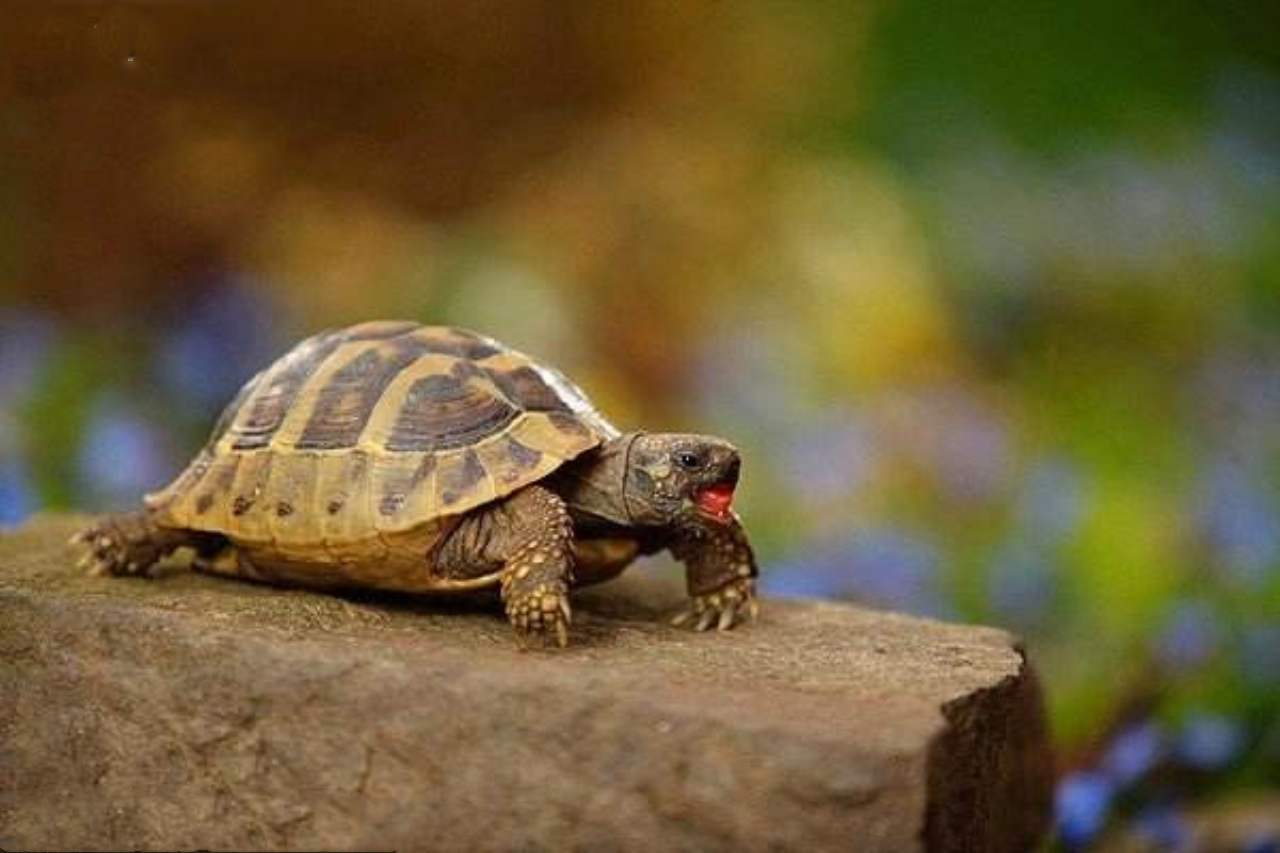
In animal taxonomy, it belongs to Reptilia, turtle order and turtle family, and is one of the common turtles. It's an ancient reptile. It is characterized by a very strong shell on its body. When attacked, the turtle can retract its head, tail and limbs into its shell (except for sea turtles and crocodile turtles). Most turtles are carnivorous, feeding on worms, snails, shrimps and small fish, as well as stems and leaves of plants. There are almost all kinds of turtles in China, but the production in the middle and lower reaches of the Yangtze River is higher. It is also produced all over Guangxi, especially in Southeast and South Guangxi. It is mainly distributed in Japan, South Korea and North Korea.
We can distinguish sea turtles from land turtles by their shells. However, it is not enough to look at their shells to reveal the mystery of their longevity. Tortoise is also known as turtle order or turtle large shield, with its appearance can strength circle powder.
On every continent except Antarctica, turtles can adapt to all kinds of extreme environments and eat all kinds of incredible food. They are a species older than humans.
1. The difference between turtle and tortoise
Turtles are a great creature, of all shapes and sizes, living in many different environments. But they are all reptiles of the order chelonidae, including turtles, tortoises and sea turtles. What a turtle eats depends on the environment in which it lives. Terrestrial turtles feed on beetles, fruits and grass, while turtles feed on algae, squid and jellyfish.
The simplest way to distinguish between a turtle and a tortoise is to look at their toes. There are full or half webs between the toes of a turtle, while the feet of a tortoise are thicker and there are no webs between them. Second, most tortoises have high domed back armour that protects them from land predators, and most tortoises are slow-moving. Turtle shells tend to be flatter, more aerodynamic in shape, and generally agile. One exception is the biscuit tortoise in East Africa, whose shell is so flat that it looks like it was trampled on, because when threatened, it wedges into narrow rocks and then inflates itself with air, making it difficult for hunters to remove it. Finally, water turtles tend to be carnivorous, while tortoises are generally vegetarian.
2. Turtles can also make sounds
Turtles can make sounds by swallowing or pushing air out of their lungs, and some species make unique sounds. The red legged tortoise, a South American species, makes a series of cackles that sound like chicken crows. Male Burmese tortoises in Southeast Asia emit a high pitched whine like an electric motor when looking for a mate. Giant musk turtles found in Central America are known to howl like dogs when frightened or attacked. The strangest sound is made by a female leatherback turtle when she builds her nest. It's not a very lady's voice, similar to human hiccups.
3. The largest desert tortoise
The largest desert turtle recorded is called Maximus, a captive pet turtle with a shell length of 38 cm and a weight of 10.4 kg. Desert turtles not only move slowly, but also grow and reproduce slowly. It takes 18 years for desert turtles to grow to 20 cm, and 15 to 20 years for sexual maturity. These characteristics make it difficult for the species to recover when threatened by human activities.
4. The largest land turtle and water turtle species
Turtles were measured with calipers. One end of the caliper is placed on the edge of the shell (upper shell) close to the head, and the other end is placed on the shell edge above the tail. This is the so-called straight-line carapace length.
The famous giant tortoise, which lives on the Galapagos Islands and the Indian Ocean Islands, is the largest living land turtle. A male Galapagos tortoise from a Florida reserve is likely to be the largest known tortoise. In 1988, his weight was 356 kg, and by 1996 he was close to an astonishing 400 kg. The adabora tortoise, which lives in the Seychelles, may be the world's largest free roaming turtle, weighing about 305 kg. In contrast to these island giant turtles, the largest continental turtle, the African shield arm turtle, is only about 90 kg.
So far, the largest freshwater turtle on record is the Yangtze giant soft shell turtle in the khim lake, Hanoi River, Vietnam. In 2011, he was arrested for treating some wounds and was released later that year. It has a total length of 185cm, shell length of 125cm, shell width of 99cm, tail length of 35cm and weight of 169kg.
The largest of the existing sea turtles is the leatherback turtle, which is 1.83 meters long (probably longer) and weighs about 590 kilograms. It is a real giant turtle.
5. Turtles can breathe with their buttocks
The turtle has only one posterior excretory opening, called the cloaca. The feces, urine and eggs of turtles are discharged from this cloaca, so there is no doubt that the cloaca is very elastic and its opening can be extended quite wide. In a few turtles, cloaca also has a pair of well-developed vascular bursa, known as cloacal mucus sac. These cloacal sacs are surrounded by the same membrane as the cloaca. Gas exchange occurs on the membrane when the turtle is submerged in water and allows oxygen to enter the blood. In most species of turtles, this has little effect on respiration. However, a turtle in Australia takes this function to the extreme. The Fitzroy river turtle can take water in or out of the cloaca, so it can get up to two-thirds of its oxygen supply through this route.