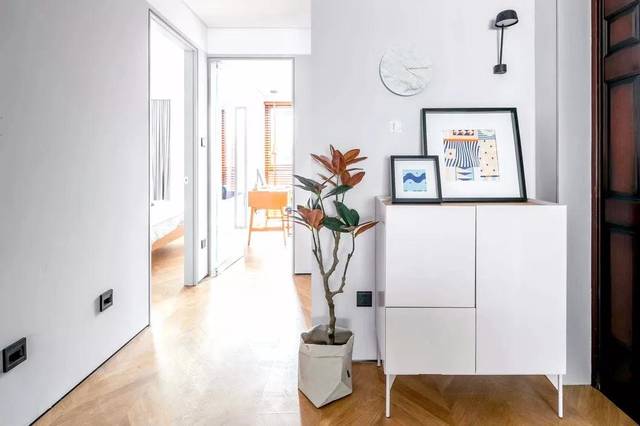
A house without plants is like a cold space, which makes people don't want to stay for a long time. Put a small green plant in the simple room, but it can make people feel warm instantly. If you can't keep the flowers alive, but you decorate your home with a little green, then the beautiful and easy to raise green plants like hupilan are really suitable for you.
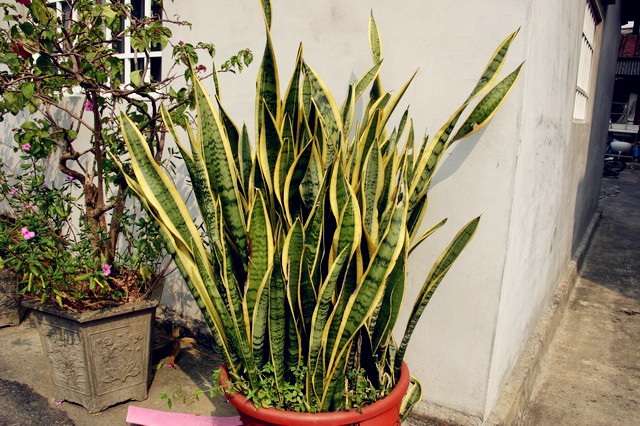
It has strong adaptability. It likes warm and humid, drought resistance, light and shade tolerance. Sandy loam with good drainage is the best. The optimum temperature for its growth is 20-30 ℃ and the wintering temperature is 10 ℃.
Tiger Piran Phnom Penh
The leaf length is 70 ~ 80 cm, the leaf margin has the golden yellow border.
Sansevieria hahnii
It is also called Cymbidium Cymbidium and Cymbidium sibiricum. The plant height is only 10 cm, and the leaves are short and wide, and the leaves are arranged in a rosette shape. The leaves are 7-10 cm long and 2.5-3 cm wide. The leaf surface is dark green with transverse gray and white tiger stripes.
Cymbidium bracteatum
The leaf margin is golden yellow to milky white, sometimes the whole leaf is golden yellow or milky white, only a small part in the center is green, other characteristics are the same as that of Coptis brevifolia.
Sansevieria cylindrica
It has short or no stems, fleshy leaves in the shape of thin round stick, sharp top, hard, upright growth, sometimes slightly curved, leaves 80-100 cm long, 3 cm in diameter, dark green surface, with transverse gray green tiger stripes. Racemes with white or pale pink florets.
Euphorbia latifolia
Also known as the fan leaf tiger skin orchid, the leaf blade is broad, assumes the fan-shaped.
Cymbidium giraldii
The plant is radial, hard leaves, wide cone-shaped, fluted leaf surface, semicircular back, leaf margin yellowish brown. The leaves are dark green with transverse pale green tiger stripes.
Cymbidium argenteus
The leaf surface is characterized by uneven width and silvery white longitudinal stripes.
Selection of Cymbidium hupehensis
Pot quality requirements: Clay flowerpots, plastic pots, porcelain pots, pottery pots can be used for cultivation.
Pot size: Cymbidium can be clustered and planted in a basin with a diameter of 16-30 cm. The root system is not deep, but the selection of high foot flowerpots is conducive to the beauty of plant shape.
Basin soil preparation
It likes loose, moderately fertile and well drained sandy soil, but it has no strict requirements on soil, so it can be drained well. Families can use the following formula: garden soil: rotten leaf soil: sand ratio is 5:2:3, peat soil: rotten leaf soil: sand soil: Perlite ratio is 4:2:2:2.
Environmental requirements
Sunlight: it's better to put the plant in the place where the sunlight can reach directly. If the condition is not allowed, it can also be placed near the sun. Long time in the shade, will cause the plant leaves yellow.
Temperature: the most suitable growth temperature is 20 ~ 30 ℃, which should not be lower than 10 ℃ in winter. Attention should be paid to heat preservation in northern areas.
Watering method
Cymbidium wilsonii likes wet and dry soil and is drought tolerant.
Spring is the growing season of new leaves, and new buds will grow at the neck of roots, which requires a little higher water content to keep the basin soil moist. After the leaves grow out, it is better to wet the basin soil, that is, the surface soil should be watered after the surface soil is dry.
When the temperature is low in winter, keep the basin soil dry but not dry. In winter, watering should be carried out along the basin to avoid the rot caused by water pouring into the leaves.
Fertilization methods
The requirement of fertilizer is not high. After the new leaves grow out in spring, it is necessary to top up the rotten liquid fertilizer, or use 1000 times diluted general fertilizer once or twice, once every 10-15 days.
Otherwise, it should not affect the growth of leaves in the pot.
Change basin and trim
Compared with other family green plants, the growth rate of Hupi orchid is faster. When the pot is full, the old leaves or overgrown branches and leaves can be cut off to ensure sufficient sunshine and growth space. In addition, change the basin every two years, change half of the new soil and trim the old leaves.
matters needing attention
1. Don't burst into light
In many families, the tiger skin orchid may be placed in the living room, desk, etc., where the sun is less. In this case, it is not appropriate to suddenly move the plant to the sun. It should be gradually moved to the place with better light, so that it can adapt to the sun, so as to avoid burning leaves.
2. Water properly
Better dry than wet when watering. Usually use clean water to scrub the dust on the leaf surface to keep the leaf surface clean and bright. According to different seasons, the germination of new plants in spring festival needs more watering to keep the basin soil moist; in the high temperature season, keep the basin soil moist; in autumn and winter, properly control water to increase the cold resistance.